
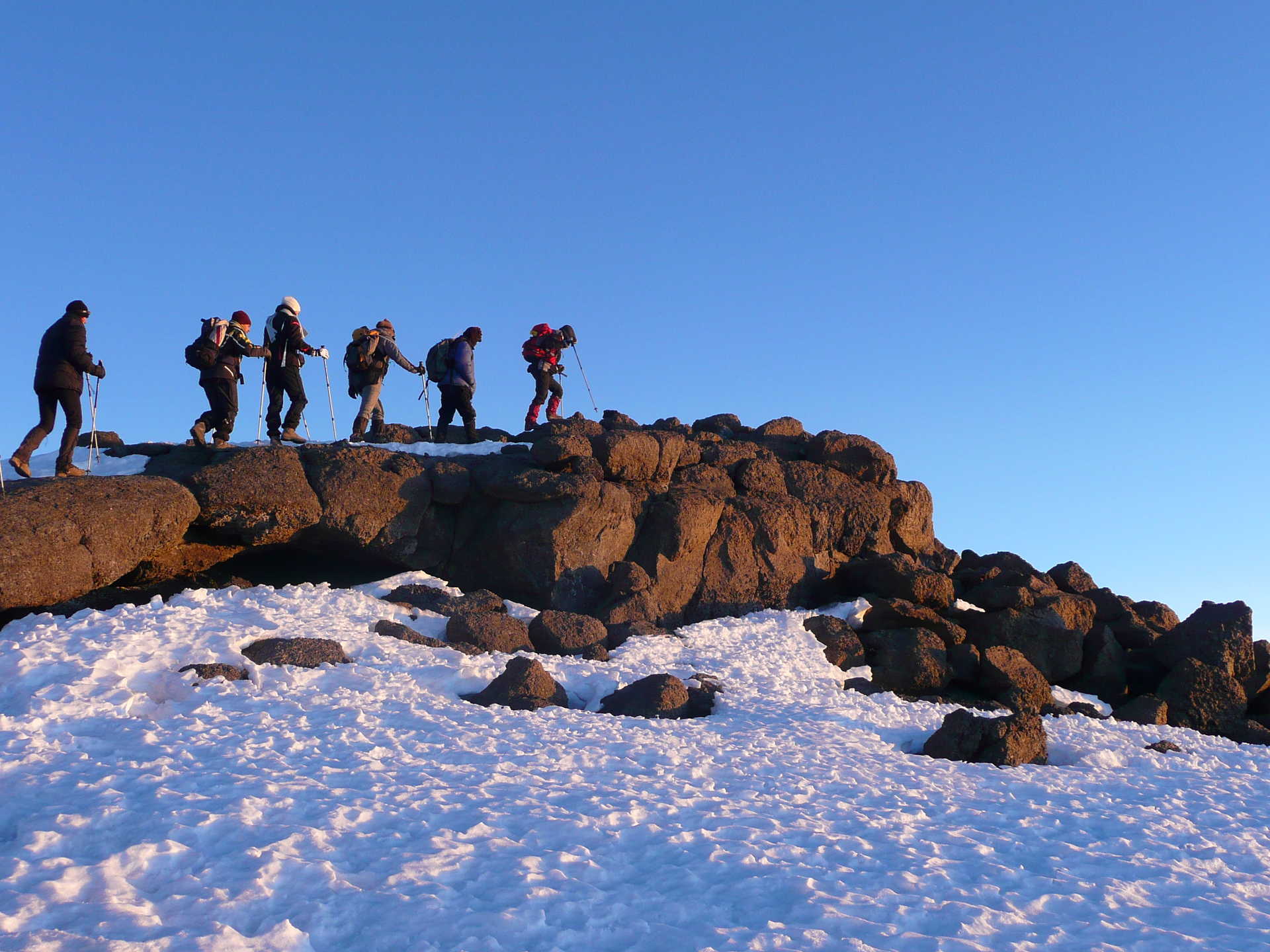
Mount Kilimanjaro Travel Guide (2026): Complete Guide for Indian Travellers
Mount Kilimanjaro is one of the most iconic travel goals in Africa. Rising above northern Tanzania, it is the highest mountain on the continent and one of the most recognised trekking summits in the world. For Indian travellers looking to climb Mount Kilimanjaro as part of a Tanzania journey in 2026, it offers something very different from Serengeti, Ngorongoro and Zanzibar: a physical challenge, a personal milestone and the chance to stand on the "Roof of Africa."
Kilimanjaro is often described as a non-technical climb, but that does not mean it is easy. You do not need ropes, ice axes or mountaineering experience on the standard trekking routes, but you do need endurance, patience, altitude awareness, proper preparation and the right route. The mountain's difficulty comes mainly from altitude, weather, long trekking days and summit-night fatigue.
For Indian travellers, Kilimanjaro works best when planned as part of a larger Tanzania journey. Some travellers climb first, then recover on safari in Tarangire, Ngorongoro and Serengeti. Others finish in Zanzibar for beach relaxation. The most complete version combines the trek with both safari and Zanzibar.
Why Visit Mount Kilimanjaro in 2026?
Kilimanjaro is not just another mountain trek. It is a major personal achievement and one of the world's most accessible high-altitude summits for trekkers without technical climbing backgrounds. The attraction is partly physical and partly emotional — you begin in warmer lower forest zones, walk through moorland and alpine desert, then climb toward a cold summit zone where the air is thin and every step feels deliberate. The landscape changes dramatically over a few days, making the climb feel like a journey through different ecological worlds.
For Indian travellers, Kilimanjaro also pairs naturally with Tanzania's other strengths. A successful climb can be followed by a slower safari, where you sit in a vehicle instead of trekking. Zanzibar then becomes the recovery phase: beach, spa, warm water, seafood, sunsets and slow mornings. Kilimanjaro is best for travellers who want their Tanzania trip to include challenge, not only comfort — active honeymooners, adventure travellers, friends' groups, milestone birthday travellers, fitness-focused families with older children and anyone who wants a story that goes beyond a standard holiday.
Where Is Mount Kilimanjaro?
Mount Kilimanjaro is in northern Tanzania, close to the town of Moshi and not far from Arusha. Most international travellers arrive through Kilimanjaro International Airport, which is also the main airport for Tanzania's northern safari circuit. This location makes Kilimanjaro easy to combine with Arusha, Tarangire National Park, Ngorongoro Crater, Serengeti National Park, Lake Manyara and Zanzibar.
A practical route for Indian travellers is:
India → Kilimanjaro International Airport → Moshi / Arusha → Kilimanjaro climb → Tanzania safari → Zanzibar → India
If your main goal is only the climb, you can fly in and out of Kilimanjaro International Airport. If you want safari and beach, it is often better to arrive through Kilimanjaro and depart from Zanzibar.
Is Kilimanjaro Difficult?
Yes, Kilimanjaro is difficult, but it is achievable with proper preparation. The main challenge is altitude, not technical climbing. The summit, Uhuru Peak, stands at 5,895 metres. At that height, oxygen levels are much lower than at sea level, and even fit travellers can struggle. Fitness helps, but it does not guarantee success — acclimatisation, route length, hydration, slow pacing and guide quality matter deeply.
The most common mistake is choosing too short a route to save money or time. Five-day climbs may be cheaper, but they reduce acclimatisation time. Longer routes usually improve the body's chance to adjust. Summit night is cold, dark, slow and mentally demanding — you may start walking around midnight and continue for several hours before sunrise. The climb is best approached with humility: train properly, choose a longer route, listen to your guide and accept that altitude affects everyone differently.
Best Kilimanjaro Routes in 2026
1. Machame Route — Best Popular Scenic Route
Recommended duration: 6 to 7 days
Best for: Fit first-time climbers, scenic variety, strong trekking experience
Style: Camping route
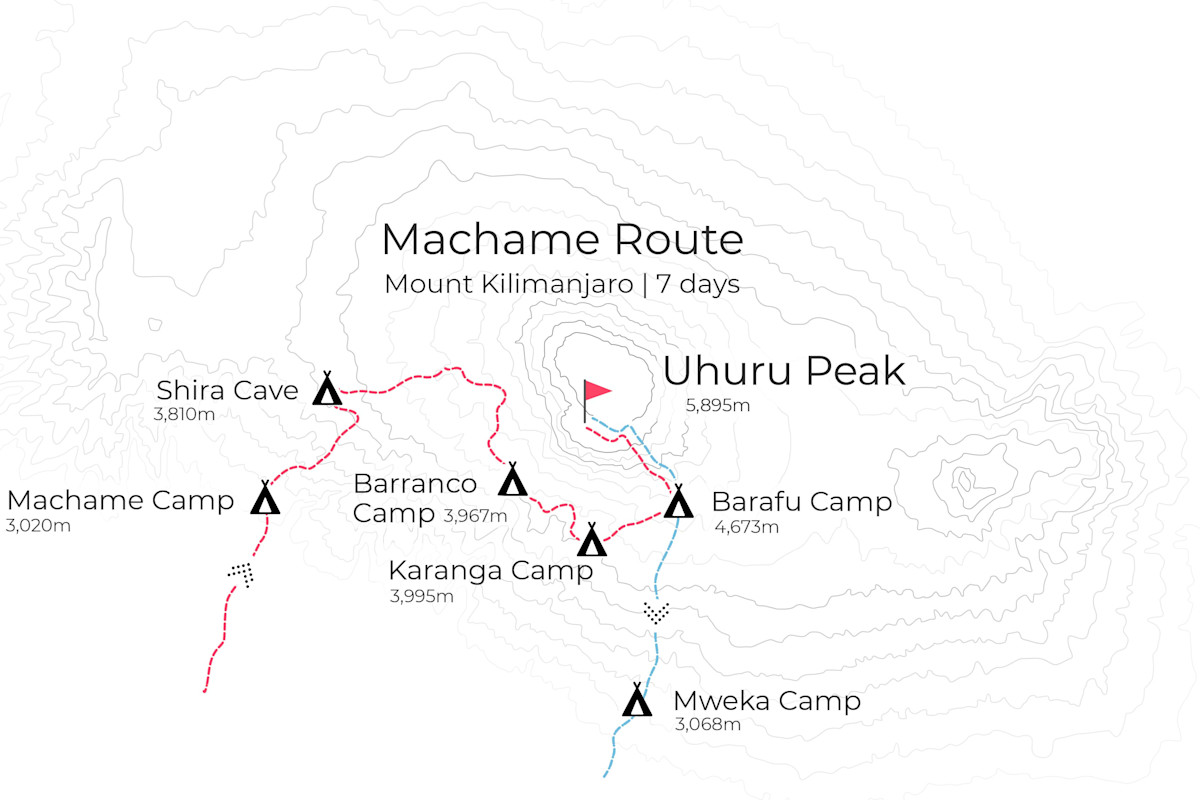
Machame is one of the most popular Kilimanjaro routes because it offers excellent scenery and a strong trekking experience. Often called the "Whiskey Route" because it is more demanding than Marangu, the route usually takes six or seven days. The seven-day version is better because it allows more acclimatisation, and the route uses the "climb high, sleep low" principle in parts, which can help the body adjust.
For Indian travellers who are reasonably fit and want a classic Kilimanjaro climb, Machame is one of the best choices.
2. Lemosho Route — Best Overall Route for Comfort and Acclimatisation
Recommended duration: 7 to 8 days
Best for: Luxury trekkers, first-time climbers, better acclimatisation
Style: Camping route
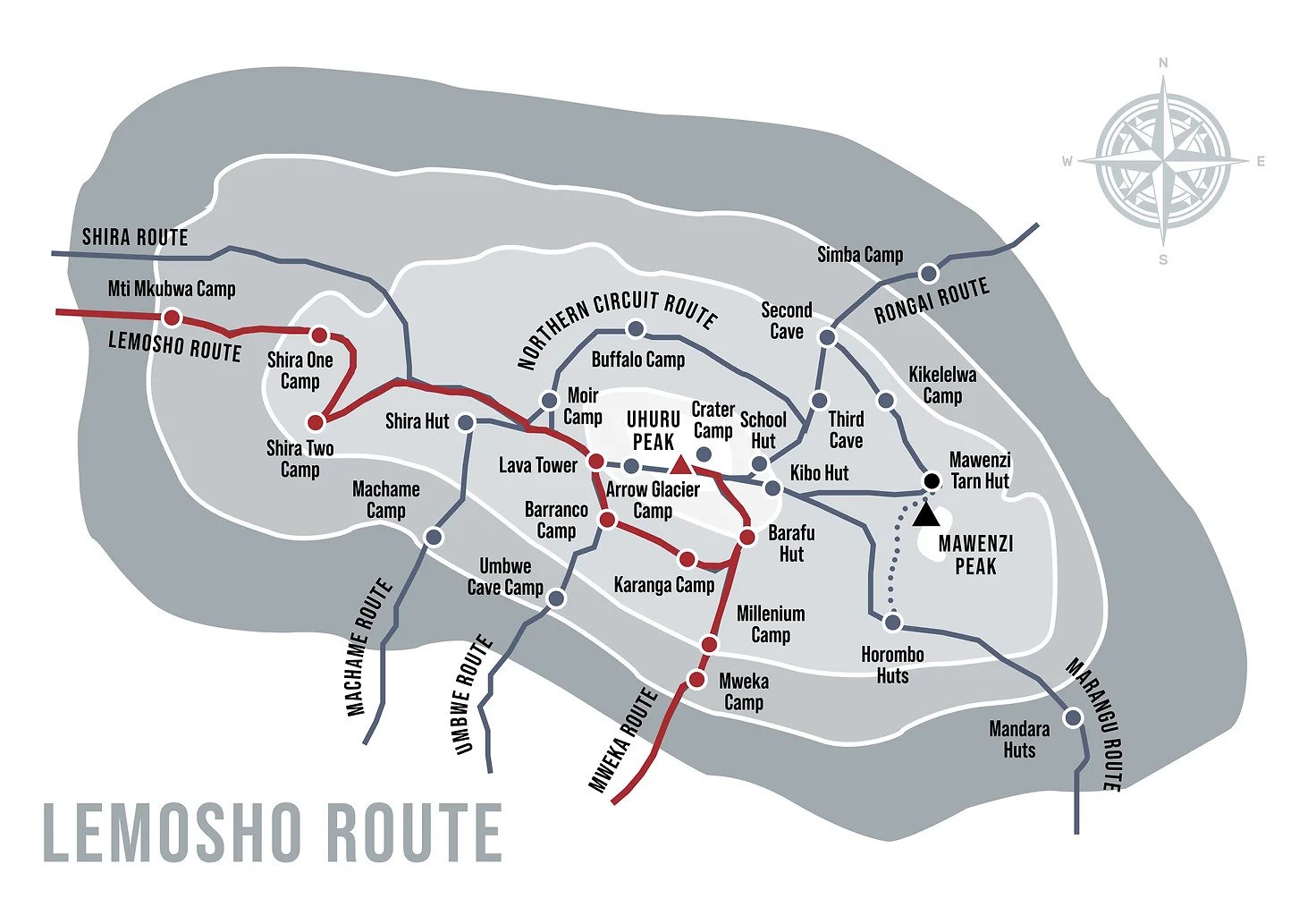
Lemosho is often considered one of the best Kilimanjaro routes because it is scenic, gradual and offers strong acclimatisation potential. It begins from the western side of the mountain and crosses varied landscapes before joining other routes higher up. The route is longer, which usually means higher cost, but also better pacing.
For Indian travellers who want a higher-quality climb and are willing to invest properly, Lemosho is usually the strongest recommendation. Choose the 8-day version if summit success and comfort are priorities.
3. Marangu Route — Best Hut-Based Route
Recommended duration: 5 to 6 days
Best for: Travellers who prefer hut accommodation
Style: Hut-based route
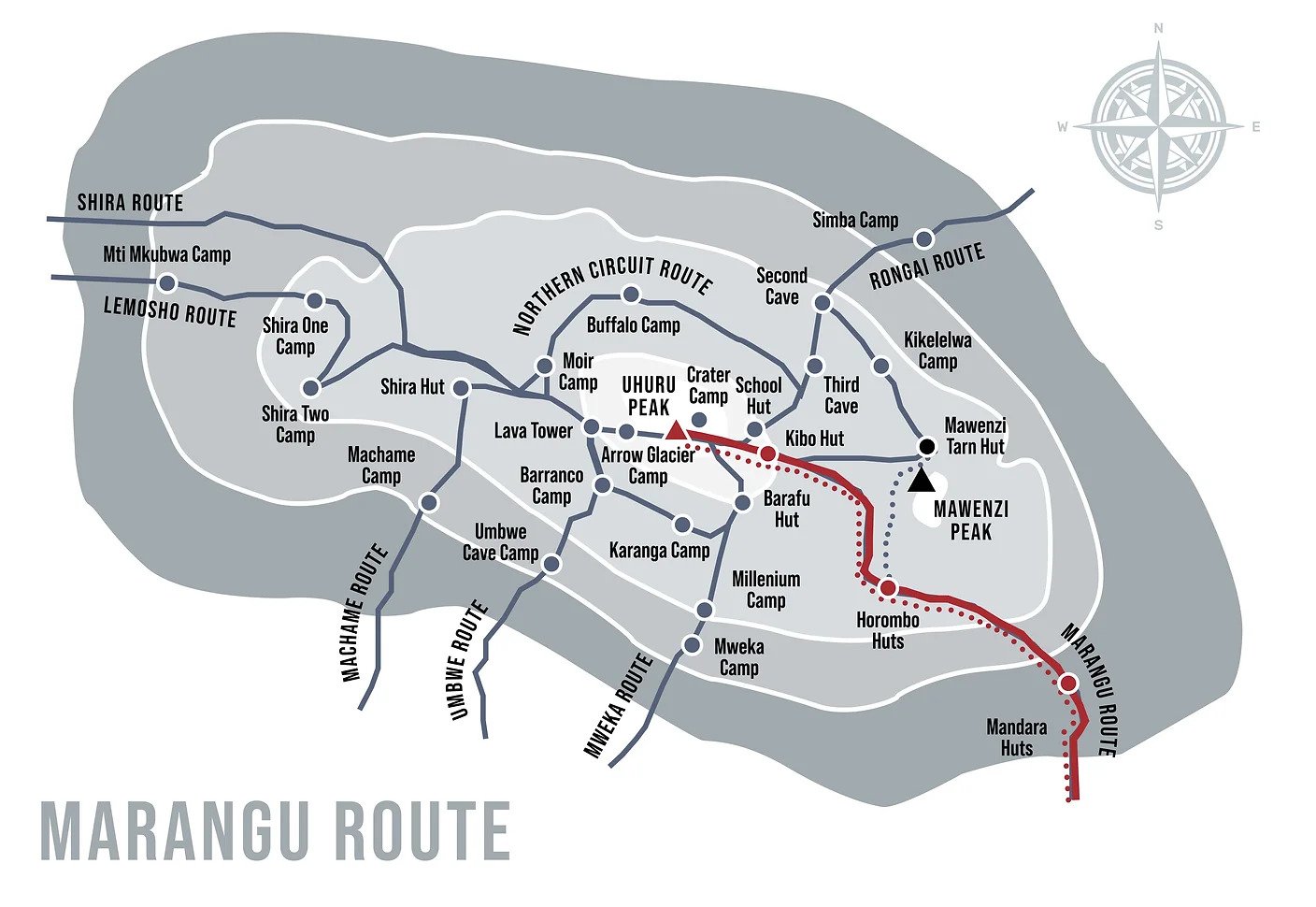
Marangu is the only major route with hut accommodation instead of camping, making it attractive to travellers who do not want to sleep in tents. The 6-day version is better than the 5-day version, as the 5-day climb is usually too rushed for many travellers.
Marangu is practical, but not always the best choice for summit success because the shorter standard duration can reduce acclimatisation quality. Choose it if hut accommodation matters more than route scenery or if you strongly dislike camping.
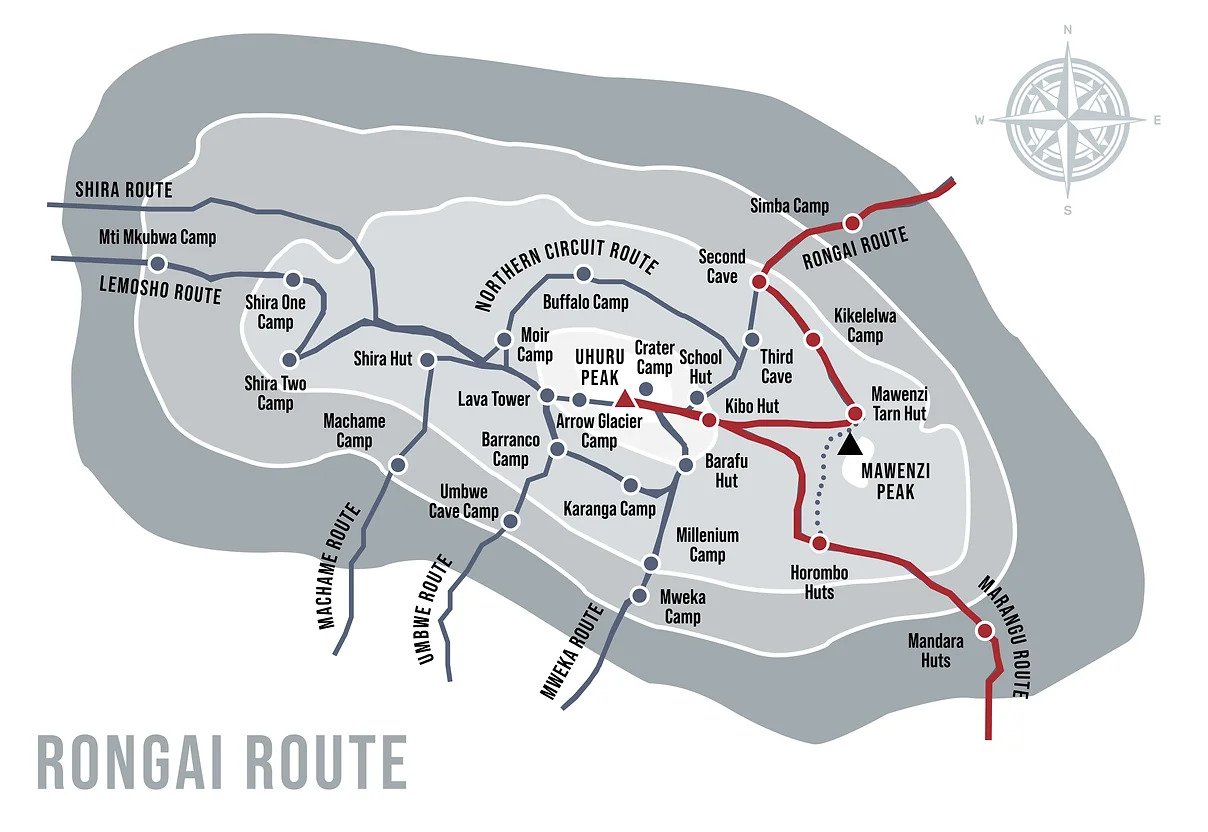
4. Rongai Route — Best Quieter Route from the North
Recommended duration: 6 to 7 days
Best for: Travellers wanting a quieter route
Style: Camping route
Rongai approaches Kilimanjaro from the north and is often quieter than Machame or Marangu. It has a more gradual feel in places and can be attractive during wetter periods because the northern side may be drier. It is a good choice for travellers who want fewer crowds and a different route character, though it may feel less dramatic in scenery compared with Machame or Lemosho.
For Indian travellers wanting a less busy trek, Rongai is worth considering.
Which Kilimanjaro Route Should Indian Travellers Choose?
For most Indian travellers, the best route is Lemosho 8 days or Machame 7 days.
- Choose Lemosho if you want better pacing, high scenic value and a more premium trekking experience.
- Choose Machame if you want a classic, scenic and slightly more cost-efficient route.
- Choose Marangu only if hut accommodation is important.
- Choose Rongai if you prefer quieter trekking and a northern approach.
- Choose Northern Circuit if budget and time allow and acclimatisation is the priority.
The route decision should not be based only on price. A cheaper, shorter climb can reduce summit chances and make the experience more difficult.
Best Time to Climb Kilimanjaro in 2026
Kilimanjaro can technically be climbed throughout the year, but the best periods are the drier seasons. Several specialist climbing operators identify January to early March and June to October as the best broad windows for stable weather and clearer conditions.
January to March
This is one of the best windows for climbing. Conditions are often clearer than the long rainy season, and the mountain may be slightly less crowded than peak summer months. Summit conditions can still be very cold. This period works well if you want to combine Kilimanjaro with Southern Serengeti or Ndutu calving season.
June to October
This is the most popular climbing window. It aligns well with Tanzania's dry safari season and works beautifully for Kilimanjaro plus Serengeti, Ngorongoro and Zanzibar. July, August and September are especially popular, so routes can be busier and prices may be higher.
November to December
This period can work, especially around late December, but short rains may affect conditions. It is not the first recommendation for most first-time climbers.
April to May
This is the long rainy season and is generally less suitable for first-time Indian travellers. Trails can be wetter, views less reliable and comfort reduced. For most Indian travellers, the best months are January, February, July, August, September and early October.
Kilimanjaro Climb Cost from India in 2026
Kilimanjaro climb cost depends on route, number of days, operator quality, group size, guide and porter support, accommodation before and after the climb, equipment rental, tips and whether safari or Zanzibar is added. As a practical 2026 planning range:
Standard Kilimanjaro Climb
Approximate cost: USD 2,500–4,000 per person
This usually includes park fees, guides, porters, cooks, meals on the mountain, tents or
huts depending on route, and basic pre/post-climb support.
Premium Kilimanjaro Climb
Approximate cost: USD 4,000–6,500 per person
This includes better mountain support, stronger logistics, higher staff-to-climber ratios,
better food, improved camping equipment and more comfortable hotel arrangements.
Luxury Kilimanjaro Climb
Approximate cost: USD 7,000+ per person
This may include private climbs, premium camping setups, better toilets, upgraded hotels,
dedicated support, enhanced safety equipment and custom routing. International flights from
India are additional unless quoted as a complete package. Safari and Zanzibar extensions
significantly increase the total cost but also make the journey more complete.
Fitness and Training for Kilimanjaro
You do not need to be an elite athlete, but you must train. Start training at least three to four months before the climb. If you are not already active, begin earlier. The goal is not speed — Kilimanjaro is climbed slowly. The goal is endurance, joint strength, breathing comfort and mental patience.
Useful training includes:
- Long walks of 2 to 5 hours
- Stair climbing
- Incline treadmill sessions
- Squats and lunges
- Core training
- Back-to-back weekend hikes
- Walking with trekking shoes and a light backpack
Indian travellers living in cities such as Delhi, Mumbai, Gurgaon, Bengaluru or Hyderabad should simulate long walking days because daily city life does not automatically prepare the body for mountain trekking.
Altitude Sickness: What Indian Travellers Should Know
Altitude sickness is the main risk on Kilimanjaro. It can affect anyone, regardless of age or fitness. Symptoms may include headache, nausea, tiredness, poor sleep, dizziness or loss of appetite. Good operators manage altitude carefully — guides monitor pace, symptoms and oxygen levels where equipment is available. The most important prevention principles are slow walking, hydration, eating properly, avoiding alcohol and choosing a route with enough days.
A longer route is usually safer than a rushed climb. If symptoms become severe, descent is the correct response. Do not ignore guide advice — summit success is not more important than safety. Travellers with heart, lung, blood pressure or other medical concerns should consult a doctor before booking Kilimanjaro.
Food on Kilimanjaro
Food on Kilimanjaro is usually prepared by the mountain crew. Meals are designed to provide energy and warmth rather than fine dining. Expect soups, rice, pasta, vegetables, potatoes, eggs, porridge, fruit, tea, coffee and packed lunches. Indian vegetarian food is possible with the right operator, but it must be requested in advance. Jain, vegan and no-onion/no-garlic meals require very clear communication before the trek.
Because appetite can drop at altitude, simple, warm and digestible meals are important. Carry approved snacks from India if needed — energy bars, nuts or comfort foods — but avoid overpacking. After the climb, food quality improves significantly once you return to Moshi, Arusha, safari lodges or Zanzibar resorts.
What to Pack for Kilimanjaro
Packing is critical. Kilimanjaro has multiple climate zones, and summit night can be extremely cold. Essential items include thermal base layers, a fleece jacket, an insulated down jacket, waterproof jacket and trousers, trekking trousers, warm hat and gloves, sun hat, good trekking boots, thick socks, headlamp, sunglasses, sunscreen, trekking poles, daypack, water bottles or hydration bladder, a sleeping bag suitable for cold conditions, personal medication, wet wipes, power bank and a duffel bag for porters.
Do not rely on new boots — break them in before travel, as poor footwear can ruin the climb. If you are continuing to safari and Zanzibar, pack separately so mountain gear does not complicate the rest of the journey.
Kilimanjaro with Safari: Best Combinations
Kilimanjaro combines naturally with Tanzania safari because the mountain is in northern Tanzania, close to the safari circuit.
Kilimanjaro + Tarangire + Ngorongoro
Best for travellers with limited time after the climb. This gives elephants, crater wildlife and a softer safari recovery.
Kilimanjaro + Ngorongoro + Serengeti
Best for travellers who want the strongest wildlife experience after the climb. Serengeti adds scale and big cats.
Kilimanjaro + Serengeti + Zanzibar
Best for travellers who want adventure, safari and beach in one journey.
Kilimanjaro + Full Tanzania Safari + Zanzibar
Best for travellers with 14 to 18 days. This is the most complete version: mountain, wildlife and Indian Ocean recovery. For most Indian travellers, the best order is climb first, safari second, Zanzibar last. This puts the most physically demanding section at the beginning and ends with rest.
Flights and Visa for Indian Travellers
Indian travellers usually reach Kilimanjaro through one-stop international routes via hubs such as Doha, Dubai, Addis Ababa or Nairobi. Kilimanjaro International Airport is the best arrival airport for the climb. Indian passport holders need a Tanzania visa, the official Tanzania eVisa applies to the United Republic of Tanzania, including mainland Tanzania and Zanzibar. Apply through immigration go before departure and ensure passport validity, blank pages, flight details and accommodation documents are in order. If continuing to Zanzibar after the climb and safari, you usually do not need a separate Zanzibar visa for standard tourist travel because Zanzibar is part of Tanzania.
Who Should Climb Kilimanjaro?
Kilimanjaro is best for active travellers who want a challenge, not only a holiday. It suits trekkers, adventure honeymooners, milestone birthday travellers, fitness-focused groups and travellers who want a personal achievement. It is not ideal for travellers who dislike discomfort, have no time to train, want only luxury relaxation or have medical conditions that make altitude risky. If you want adventure but not a major physical challenge, choose safari and Zanzibar instead. If you want a defining travel achievement, Kilimanjaro is one of Africa's best options.
Common Mistakes to Avoid
- Choosing Too Short a Route: Short routes reduce acclimatisation time. Choose 7 or 8 days where possible.
- Underestimating Altitude: Fitness does not guarantee altitude success. Respect the mountain.
- Booking Only by Price: Cheap climbs may compromise safety, guide quality, food, porter welfare or equipment.
- Packing Poorly: Bad boots, weak rain gear or insufficient warm clothing can make the climb miserable.
- Skipping Training: Kilimanjaro requires endurance. Prepare properly and allow three to four months of preparation.
- Planning Safari Too Tightly After Descent: Keep at least one recovery night before beginning a busy safari route.
Why Plan Kilimanjaro with Luxury Unlocked?
Luxury Unlocked helps Indian travellers plan Kilimanjaro as part of a complete Tanzania journey. We help choose the right route, climb duration, operator level, pre-climb hotel, safari extension, Zanzibar stay, dietary coordination and travel flow from India.
Whether you want a Kilimanjaro-only climb, Kilimanjaro with Serengeti, or a full Kilimanjaro, safari and Zanzibar itinerary, our specialists design the journey around your fitness, dates, comfort level and travel goals. Explore our Tanzania Tour packages or contact Luxury Unlocked to plan your 2026 Kilimanjaro journey from India.